


Glob Top Encapsulation Protection
Precision glob top dome encapsulation for wire-bonded semiconductor die — chip-on-board (COB), hybrid circuit and module protection against moisture, mechanical impact and chemical exposure.
Reliable Glob Top Protection for Wire-Bonded Semiconductor Die
Glob top encapsulation is the standard protection method for chip-on-board (COB) assemblies, hybrid circuits and many module-level semiconductor products where a bare die is wire-bonded directly to a PCB, ceramic substrate or flexible circuit rather than housed in a discrete package. The dispensed dome of epoxy or silicone material covers the die and its delicate wire bonds, providing protection against moisture ingress, mechanical impact, dust contamination and chemical exposure that the unprotected die and bond wires could not otherwise survive in field use — found extensively in smart cards, RFID modules, automotive sensor hybrids, LED driver modules and cost-sensitive consumer electronics where full packaging would add unnecessary cost.
The dispensing challenge in glob top encapsulation is forming a consistent, void-free dome that fully covers the die and the highest point of the wire bond loops — without dispensing so much material that the dome spreads beyond its intended footprint onto adjacent components or board features, and without dispensing with enough force or speed that the encapsulant flow displaces or damages the fine wire bonds it is meant to protect. Dome height, footprint diameter and dispensing volume must all be calculated together and validated for each unique die and wire bond configuration before production release.
SANCO desktop visual dispensing machines deliver the precise volume control, programmable dome patterns and gentle dispensing flow control needed for glob top encapsulation across chip-on-board, hybrid circuit and module-level semiconductor protection applications.
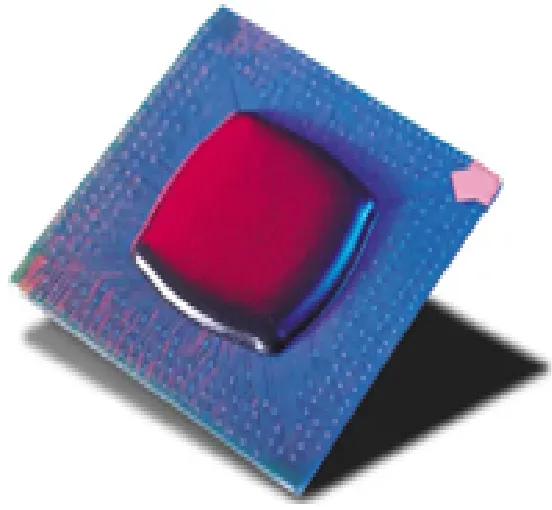
Why Glob Top Encapsulation Demands Careful Dome Geometry Control
Glob top encapsulation must protect fragile wire bonds and die while maintaining a controlled dome footprint that doesn't interfere with adjacent components.
Wire Bond Loop Height Coverage
The dispensed dome must rise above the highest point of the wire bond loop arc — typically 100–250 µm above the die surface — to provide complete mechanical protection. Insufficient dome height leaves bond wire tops exposed to mechanical damage.
Footprint Control on Densely Populated Boards
Glob top applications on chip-on-board assemblies often have limited board real estate, with discrete components, connectors or other dies positioned close to the glob top area. Dome footprint diameter must be precisely controlled to stay within the available keep-out boundary.
Wire Bond Wash-Out Risk During Dispensing
Fine gold or aluminium wire bonds (often 18–25 µm diameter) are vulnerable to displacement if dispensing flow rate or approach velocity is too aggressive. Dispensing parameters must introduce material gently enough to flow around bonds without bending or breaking them.
Void Formation Around Wire Bond Arcs
Air can become trapped beneath and around wire bond loop arcs during dome formation, particularly for densely wire-bonded die with many closely spaced bonds. These voids weaken mechanical protection and can expand during thermal cycling, eventually exposing the wire bond to environmental damage.
Dome Symmetry and Cosmetic Consistency
For visible or cosmetically sensitive applications, dome shape and surface finish consistency across production units matters for both functional sealing performance and visual quality control acceptance criteria.
Material Selection for Application Environment
Glob top materials range from rigid epoxies (best mechanical protection, higher stress on die) to flexible silicones (lower stress, better thermal cycling performance but softer mechanical protection) — selection depends on the specific environmental and mechanical requirements of each application.
Key Capabilities for Glob Top Encapsulation Protection
Programmable Dome Volume & Height Control
Precise volumetric dosing combined with material rheology produces consistent dome height and footprint, calculated specifically for each die size and wire bond loop height configuration.
CCD Vision Boundary Alignment ±0.1 mm
Vision-guided dispensing positions the dome centre accurately on densely populated boards, maintaining clearance from adjacent components within the available keep-out boundary.
Low-Velocity Dispensing for Wire Bond Protection
Controlled dispensing flow rate and approach pattern introduce glob top material gently around wire bond arcs, preventing wash-out or displacement of fine bond wires during dome formation.
Multi-Site High-Speed Dispensing
Fast axis movement between dispensing positions supports high-throughput glob top application across multi-die boards or panel arrays without sacrificing dome quality per site.
Bubble Release Dwell Programming
Programmable dwell time and optional vacuum exposure after dispensing allow trapped air to escape from around wire bond arcs before the material gels — reducing void content in the cured dome.
Epoxy & Silicone Material Compatible
Interchangeable valve configurations handle both rigid epoxy and flexible silicone glob top materials, supporting material selection based on application environmental requirements.
Board Layout CAD Import
Import PCB or substrate CAD data to auto-generate dome dispensing positions, volumes and keep-out boundaries for each glob top site — reducing NPI programming time for new board designs.
Inline Wire Bonder Integration
SMEMA-compatible conveyor integration links SANCO glob top dispensing equipment directly between wire bonding inspection and cure oven stations.
The Glob Top Encapsulation Process Step by Step
Glob top encapsulation requires gentle, precisely controlled dispensing to protect wire bonds while achieving consistent dome geometry. SANCO equipment supports every stage.
Wire Bond Inspection
Bonded die assembly inspected for bond integrity and loop height. Defects corrected before encapsulation proceeds.
Material Conditioning & Loading
Glob top material conditioned to room temperature, mixed if two-component, and loaded into the dispensing syringe with air purged.
Controlled Dome Dispensing
SANCO machine dispenses material in a calculated dome pattern, with gentle flow control to protect wire bonds and vision-guided positioning to maintain keep-out boundaries.
Self-Level & Bubble Release
Dispensed dome self-levels to a smooth profile. Dwell time or light vacuum allows trapped air to escape before gelation begins.
Cure & Reliability Inspection
Thermal or UV cure per material specification. Visual inspection confirms coverage; sample thermal cycling and pull testing verify protection performance.
Glob Top Material Types & SANCO Compatibility
SANCO dispensing machines handle the full range of glob top encapsulation materials used for chip-on-board and hybrid circuit die protection.
| Material Type | Viscosity Range | Cure Method | Typical Application | SANCO Compatibility |
|---|---|---|---|---|
| Rigid Glob Top Epoxy | 5,000 – 30,000 mPa·s | Thermal 150°C, 1–2 h | Maximum mechanical protection for chip-on-board assemblies in smart cards, RFID modules and consumer electronics | Recommended |
| Flexible Glob Top Silicone | 3,000 – 20,000 mPa·s | Thermal 100–150°C | Stress-tolerant die protection for applications with significant CTE mismatch or thermal cycling exposure | Recommended |
| UV-Cure Glob Top Epoxy | 2,000 – 15,000 mPa·s | UV 365 nm, 10–30 s + thermal post-cure | Rapid-handling glob top for high-throughput chip-on-board lines requiring fast in-process strength | Recommended |
| Low-Stress Glob Top Compound | 4,000 – 18,000 mPa·s | Thermal 125–150°C | Reduced-stress encapsulation for sensitive die in hybrid circuits and automotive sensor modules | Recommended |
| Black Glob Top Epoxy (Light-Blocking) | 5,000 – 25,000 mPa·s | Thermal 150°C, 1–2 h | Opaque encapsulation for light-sensitive die requiring optical isolation in addition to mechanical protection | Recommended |
Frequently Asked Questions
How does SANCO calculate the correct dome volume to fully cover wire bond loops?
SANCO dispensing programmes calculate dome volume based on the die footprint area, the wire bond loop height (measured during process development), and the required protective margin above the loop arc — typically 50–100 µm minimum clearance. This calculation is validated by cross-section sampling during initial process qualification for each unique die and wire bond configuration. Contact our application engineers for dome volume calculation support.
How does SANCO prevent wire bond wash-out during glob top dispensing?
SANCO dispensing machines use controlled, low-velocity flow rates and an approach pattern that introduces material gradually rather than as a sudden jet — minimising the force exerted on fine wire bonds during dome formation. Dispensing parameters are calibrated specifically for each wire bond pitch and wire diameter during process development.
Can SANCO maintain dome footprint boundaries on densely populated chip-on-board assemblies?
Yes. SANCO's CCD vision alignment positions the dispensing pattern accurately relative to surrounding components, and the calculated dome volume combined with material rheology produces a predictable footprint diameter that stays within the available keep-out boundary, validated during process qualification for each board layout.
What void content can SANCO achieve in glob top dome encapsulation?
With optimised dispensing parameters and dwell time for bubble release, SANCO equipment typically achieves void content suitable for standard chip-on-board reliability requirements. For applications with stricter void specifications, optional vacuum exposure during the dwell period further reduces entrapped air before material gelation.
Can SANCO dispense both rigid epoxy and flexible silicone glob top materials on the same machine?
Yes. SANCO dispensing machines use interchangeable valve configurations that accommodate both rigid epoxy and flexible silicone glob top formulations, allowing material changeover for different product lines or application requirements on the same equipment platform.
Where can I learn about other semiconductor packaging dispensing applications?
Visit our Applications section for guides covering die attach dispensing, chip package encapsulation, silver paste dispensing and dam and fill processes. For equipment specifications, see our dispensing machine product pages.